• Main
  • Our Research
  • The Group
  • News & Science
  • Funding & Awards & Publications
  • Food & Recipes
Menu

Georgescu Research Group at Indiana University Bloomington

Alexandru B. Georgescu
  • Main
  • Our Research
  • The Group
  • News & Science
  • Funding & Awards & Publications
  • Food & Recipes

Blog Posts From Across the Website


  • June 2022
    • Jun 11, 2022 A Sourdough Recipe For Complete Beginners Jun 11, 2022
  • May 2022
    • May 21, 2022 Quick Ramen-like Eggs (Stuff to do with leftover Easter eggs) May 21, 2022
  • May 2020
    • May 13, 2020 Trinidadian Style Curry Chickpeas (Curry Chana) May 13, 2020
  • March 2020
    • Mar 9, 2020 Brown Sugar Bubble Tea from Tiger Sugar Mar 9, 2020
  • October 2017
    • Oct 15, 2017 Riki Izakaya Oct 15, 2017
    • Oct 14, 2017 Simple Oven Jerk Chicken Recipe Oct 14, 2017

PARADIM Johns Hopkins University/Cornell University Summer School Talk

August 13, 2022

You can now watch the PARADIM Summer School talk I gave online at Johns Hopkins University. The goal with this talk was to introduce students to concepts they may need to understand the literature in the field of correlated electron materials, with a focus on superconductors, particularly cuprate and nickelate based ones; I discuss topics including what correlated electron materials are, Jahn-Teller distortions, different types of orbital models, and introduce in a non-technical way how to read a dynamical mean field theory paper and its spectral functions, and what a self-energy is.

You can watch the video here, and timestamps should guide you: https://www.youtube.com/watch?v=aVJXcH6XzJs

Here are the timestamps with the different chapters, before you click:

0:00 Intro from Tyrel McQueen 0:25 What you should get from this talk 1:40 Correlated Electron Materials in a Nutshell 2:45 Flat Bands: Kagome and Moire 3:45 Type 1 vs 2 Superconductors 4:30 Mott Physics 6:25 Electron or lattice physics? 7:00 Mott insulator 8:50 Correlated Metals 9:30 DFT vs ARPES in correlated metals: Hubbard bands and quasiparticles 10:35 DMFT, Subsidiary Bosons 11:02 DMFT Spectral function NdNiO2 and CaCuO2 11:55 Self Energy 14:45 Self-Energy and Spectral functions in SrVO3 15:03 FermiSee, simple Fermi Liquid Tool 15:57: p-d models intro 22:50 things to keep in mind when reading DMFT papers 23:30 local ionic environment and effective models 25:22 Tune Tc in cuprates via apical oxygen 27:26 Nickelate and cobaltate heterostructures for superconductivity 30:29 Machine Learning Status
Chemical Bonding Concepts in Solids

July 26, 2022

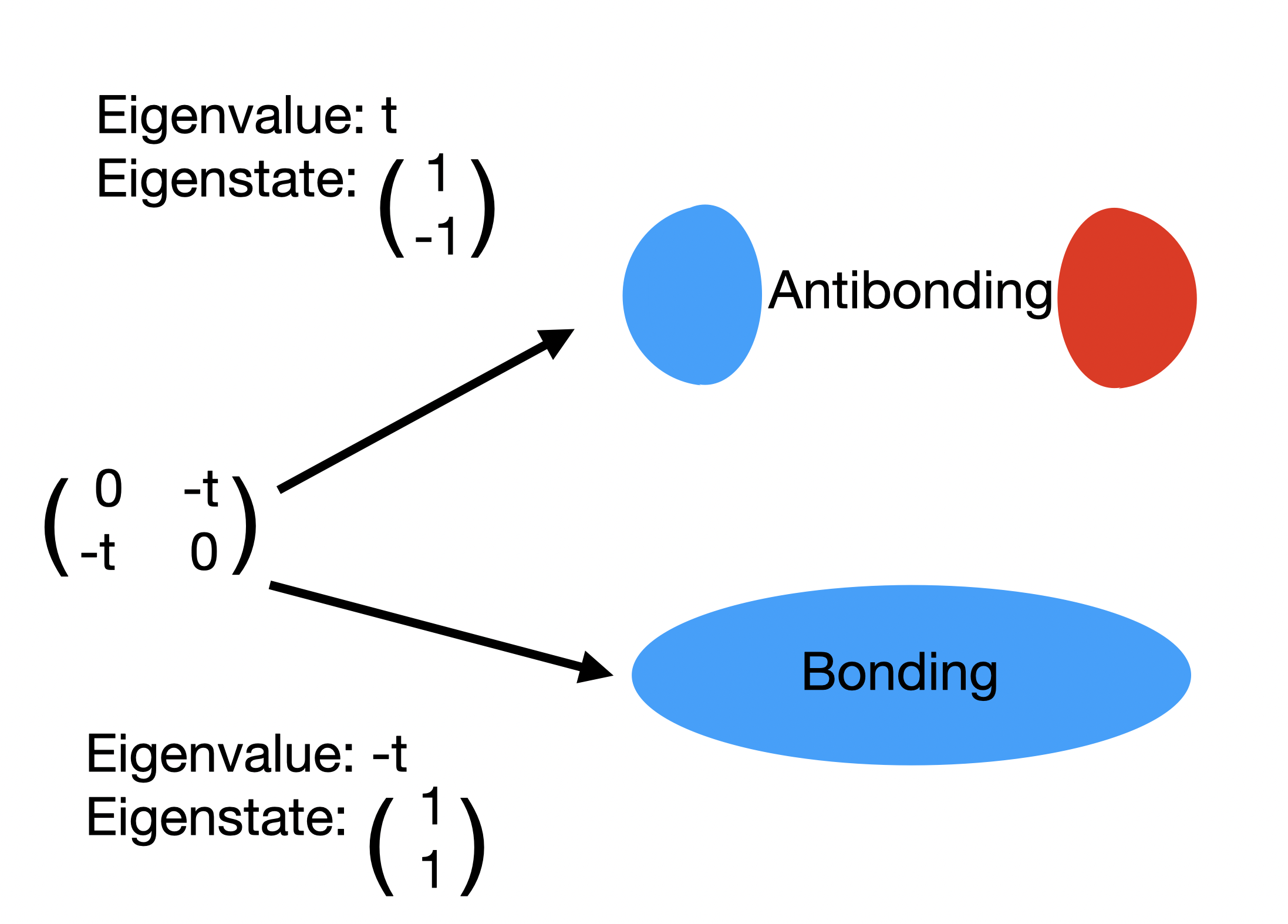
I was recently reading Nobel Chemistry laureate, Roald Hoffman’s, really nice book on bonding in solids and thought that the explanations for certain concepts (like Peierls distortion and Bloch wavefunctions) are so much clearer than the way I was taught in physics, and also make it easier for me to teach. So I decided to make this video, introducing some useful concepts from this book as well as that I use in my work on a regular basis, such as antibonding orbitals, p-d models and Wannier models. You can click on the timestamps in my comment on the video to watch the most interesting parts for you: https://www.youtube.com/watch?v=x4ihhQrS6lA

If you are a condensed matter physicist or materials scientist and never took an inorganic chemistry class, you will likely find this useful (like I did). If terms terms like Wannier functions, antibonding and p-d model are a bit confusing, you'll probably also find this useful.

I discuss chemical bonding concepts as relevant for the Peierls distortion, bonding/antibonding (antibonding orbitals destabilize materials), Bloch wavefunctions, supercells/band folding, low energy vs p-d models, Wannier functions and the LCAO (linear combination of atomic orbitals) approximation.

An Introduction to Correlated Electron Materials - youtube video

July 04, 2022

I’ve made this introductory video for people who are interested in correlated electron materials and are either new to the field or may want to learn something new. I cover things ranging from Jahn-Teller and trigonal distortions, Peierls distortion, band renormalization in correlated metals and the importance of beyond-Density Functional Theory methods, spin frustration, and so on. This is the result of A LOT of work, and I’ve found both new students, and some experienced scientists who might not be familiar to one aspect or another of the phenomenology presented here have found it interesting. So, please enjoy: https://www.youtube.com/watch?v=sp_f8UlVJOE

Trigonal Symmetry and its Electronic Effects in 2D Halides and Other Materials

March 22, 2022

This paper is now published in PRB.

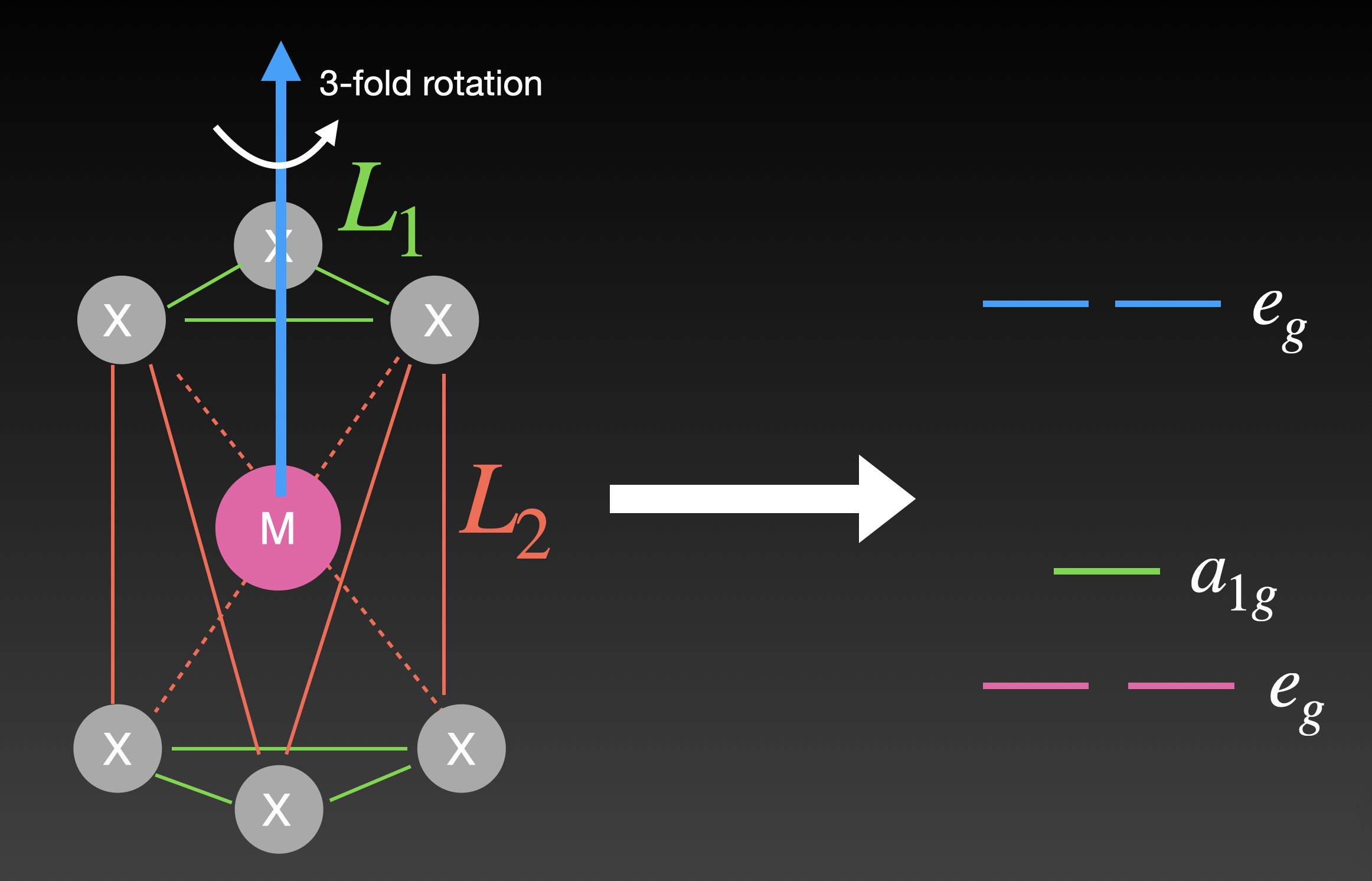
One of the difficulties I’ve found in the literature when looking at transition metal halides and dihalides, was to understand what mechanism makes these materials insulating: it’s pretty hard to understand why a 3-fold degenerate t2g orbital basis would lead to an insulating material, for an orbital filling of 1, 2, 4, 5. This is the model many people work with, however, and the result are often fancy explanations for pretty simple behavior.

The explanation is quite simple: the basis is not degenerate to begin with - and due to the broken symmetry inherent in a 2D material, it can’t be. I explain here how to reliably build a basis that conforms to the appropriate trigonal symmetry, and provide some simple matlab scripts to do so. This has important implications: particularly in the potential spin-liquid material RuCl3, which many people model as having a 3-fold degenerate orbital basis as the basis for their models. This class of materials - and more generally, edge and face-connected octahedra - have their crystal field splittings parametrized by ligand-ligand bond-length distances rather than metal-ligand bond length differences. I explain this in this 10 min talk, as well as in a paper with James Rondinelli and Andy Millis.

Youtube video here and PRB here.

New Post Coming Soon!

August 09, 2020
Newer / Older
Back to Top